

Contents
hide
1
Types of Flowers: 50+ Popular Flowers With Names, Pictures, and Characteristics
Types of Flowers: 50+ Popular Flowers With Names, Pictures, and Characteristics
Flowers bring color, fragrance, and natural beauty to gardens, homes, landscapes, and floral arrangements. From classic roses and colorful tulips to cheerful sunflowers and delicate wildflowers, thousands of flowering plants offer different shapes, colors, and growing characteristics.
Understanding the different types of flowers makes it easier to identify plants, choose suitable varieties for your garden, and find the right blooms for special occasions.
Flowers can be classified in several ways, including their life cycles, growth habits, blooming seasons, colors, and growing requirements. Some complete their life cycles in one season, while others return year after year. Some grow from bulbs, while others develop into flowering shrubs, vines, or wild plants.
This guide explores more than 50 popular types of flowers, including their names, characteristics, blooming seasons, and common uses. It also explains how to choose flowers for different gardens, climates, and purposes.
What Are the Different Types of Flowers?
There are many different types of flowers, and no single classification system covers them all. Gardeners commonly group flowers according to their life cycles, growth habits, growing environments, and flowering seasons.
The most useful gardening categories include:
- Annual flowers: Complete their life cycle in one growing season.
- Biennial flowers: Generally complete their life cycle over two growing seasons.
- Perennial flowers: Live for multiple years and may flower repeatedly.
- Bulb flowers: Grow from underground storage structures such as bulbs.
- Flowering shrubs: Woody plants that produce seasonal blooms.
- Climbing flowers: Flowering plants that climb or trail along supports.
- Wildflowers: Flowering plants growing naturally in different habitats.
A flower can belong to more than one category. For example, a tulip is a bulbous perennial, while a sunflower is commonly cultivated as an annual.
Popular Types of Flowers at a Glance
| Flower | Scientific name | Common characteristics |
|---|---|---|
| Rose | Rosa | Fragrant blooms in numerous colors |
| Sunflower | Helianthus annuus | Large, sun-loving flower heads |
| Tulip | Tulipa | Cup-shaped spring flowers |
| Daisy | Bellis and related genera | Central disk surrounded by petals |
| Lily | Lilium | Large, often fragrant flowers |
| Orchid | Orchidaceae | Distinctive and diverse flower structures |
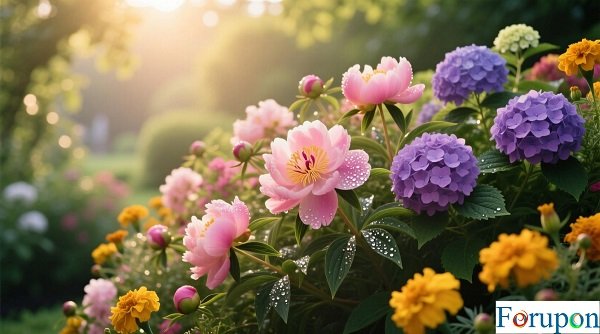
| Peony | Paeonia | Large, often fragrant blooms |
| Marigold | Tagetes | Bright yellow and orange flowers |
| Hydrangea | Hydrangea | Large clusters of small flowers |
| Zinnia | Zinnia | Colorful flowers popular in summer gardens |
| Lavender | Lavandula | Fragrant purple flower spikes |
| Dahlia | Dahlia | Decorative blooms in many shapes and sizes |
Types of Flowers by Life Cycle
One of the easiest ways to understand different flower varieties is to examine how long their plants live.
The three main life-cycle categories used in gardening are annuals, biennials, and perennials.
1. Annual Flowers
Annual flowers complete their entire life cycle within one growing season. They germinate, grow, flower, produce seeds, and die.
These flowers are popular because many varieties produce abundant blooms and provide quick color in garden beds, containers, and hanging baskets.
Popular annual flowers include:
- Zinnia: Produces colorful, daisy-like blooms and grows well in sunny locations.
- Marigold: Recognized for its bright yellow, orange, and golden flowers.
- Cosmos: Produces delicate, open flowers on slender stems.
- Petunia: A popular bedding and container flower with trumpet-shaped blooms.
- Sunflower: Known for its large flower heads and tall growth habit.
- Nasturtium: Produces colorful edible flowers and rounded leaves.
- Calendula: Features bright orange or yellow daisy-like flowers.
- Sweet pea: A climbing or trailing annual with fragrant blooms.
Best uses: Seasonal flower beds, hanging baskets, containers, borders, and cutting gardens.
2. Biennial Flowers
Biennial flowers generally take two growing seasons to complete their life cycles.
During the first season, the plant develops its roots and leaves. During the second season, it flowers, produces seeds, and usually dies.
Common biennial flowers include:
- Foxglove (Digitalis): Produces tall flower spikes with bell-shaped blooms.
- Hollyhock (Alcea): Known for its tall stems and large flowers.
- Sweet William (Dianthus barbatus): Produces colorful clusters of small flowers.
- Canterbury bells (Campanula medium): Recognized for its bell-shaped blooms.
- Forget-me-not (Myosotis): Produces small blue, pink, or white flowers.
Some plants described as biennials may behave as short-lived perennials or self-seed, depending on the species and growing conditions.
Best uses: Cottage gardens, informal flower beds, borders, and seasonal displays.
3. Perennial Flowers
Perennial flowers live for multiple years. Many herbaceous perennials die back during winter and produce new growth when favorable conditions return.
They are particularly useful for gardeners who want established flower beds without replanting every year.
Popular perennial flowers include:
- Coneflower (Echinacea): Produces prominent central cones surrounded by colorful petals.
- Black-eyed Susan (Rudbeckia): Features yellow petals and dark central disks.
- Peony (Paeonia): Known for large, often fragrant flowers.
- Daylily (Hemerocallis): Produces trumpet-shaped blooms, with individual flowers typically lasting one day.
- Iris (Iris): Recognized for its distinctive, often ruffled flower structure.
- Garden phlox (Phlox paniculata): Produces clusters of colorful flowers.
- Bee balm (Monarda): Features unusual flower heads that attract pollinators.
- Aster (Symphyotrichum and related genera): Produces daisy-like flowers, often in late summer or fall.
Best uses: Permanent flower beds, borders, pollinator gardens, and long-term landscaping.
Annual vs. Biennial vs. Perennial Flowers
| Feature | Annual | Biennial | Perennial |
|---|---|---|---|
| Life cycle | One growing season | Usually two growing seasons | Multiple years |
| Flowering | Usually within its first season | Usually second season | Depending on species and maturity |
| Replanting | Generally every year | Often every two years | Usually not necessary annually |
| Examples | Zinnia, cosmos | Foxglove, hollyhock | Peony, coneflower |
| Best for | Quick seasonal color | Two-season displays | Long-term gardens |
Types of Flowers by Growth Habit
Flowers can also be grouped by how their plants grow.
This classification is especially helpful when designing landscapes and deciding where different plants should be placed.
4. Bulb Flowers
Bulb flowers grow from underground storage structures that help plants survive unfavorable growing conditions.
True bulbs contain layers of fleshy storage leaves, while corms and tubers are different types of underground storage organs.
Popular bulb and bulb-like flowers include:
- Tulip (Tulipa): A classic spring flower available in many colors.
- Daffodil (Narcissus): Produces trumpet-shaped flowers, often yellow or white.
- Hyacinth (Hyacinthus orientalis): Known for fragrant clusters of small flowers.
- Crocus (Crocus): Produces colorful flowers, often appearing early in spring.
- Allium (Allium): Features rounded clusters of small flowers.
- Gladiolus (Gladiolus): Produces tall spikes of colorful blooms.
Other popular flowering plants, such as dahlias and begonias, grow from tubers or tuberous structures rather than true bulbs.
Best uses: Spring gardens, flower borders, containers, and seasonal landscaping.
5. Flowering Shrubs
Flowering shrubs are woody plants that produce decorative flowers while adding structure to landscapes.
They can provide seasonal color, privacy, fragrance, and visual interest.
Popular flowering shrubs include:
- Hydrangea (Hydrangea): Known for large flower clusters and several growth forms.
- Azalea (Rhododendron): Produces abundant spring flowers in various colors.
- Lilac (Syringa): Recognized for fragrant clusters of purple, pink, or white flowers.
- Camellia (Camellia): Produces attractive flowers, often during cooler seasons.
- Gardenia (Gardenia): Known for creamy white, fragrant flowers.
- Butterfly bush (Buddleja): Produces elongated flower clusters visited by butterflies.
Best uses: Garden borders, foundation planting, privacy landscaping, and ornamental gardens.
6. Climbing and Vining Flowers
Climbing flowers grow upward or spread along fences, trellises, pergolas, and other supports.
They are useful for adding vertical interest without requiring large areas of ground space.
Popular climbing flowers include:
- Clematis (Clematis): Produces large, often star-shaped flowers.
- Wisteria (Wisteria): Known for cascading clusters of fragrant flowers.
- Morning glory (Ipomoea): Produces trumpet-shaped blooms that open in daylight.
- Sweet pea (Lathyrus odoratus): A fragrant climbing annual.
- Climbing rose (Rosa): Adds flowering coverage to trellises and arches.
- Black-eyed Susan vine (Thunbergia alata): Produces colorful flowers with dark centers.
Best uses: Trellises, fences, arches, pergolas, and vertical gardens.
7. Wildflowers
Wildflowers grow naturally in meadows, grasslands, forests, wetlands, and other habitats. Some are native to the regions where they grow, while others are introduced species that have become established.
Popular North American wildflowers include:
- California poppy (Eschscholzia californica): A bright orange native flower associated with California.
- Purple coneflower (Echinacea purpurea): A perennial native to parts of eastern North America.
- Black-eyed Susan (Rudbeckia hirta): A recognizable North American wildflower.
- Butterfly milkweed (Asclepias tuberosa): Produces orange flowers and supports monarch butterfly life cycles.
- New England aster (Symphyotrichum novae-angliae): Produces purple or pink flowers in late summer and fall.
- Wild columbine (Aquilegia canadensis): Features distinctive red and yellow flowers.
Native wildflowers can support local wildlife when selected for the appropriate region and habitat.
Best uses: Native plant gardens, naturalized landscapes, meadow gardens, and pollinator habitats.
50+ Popular Types of Flowers With Names and Pictures
The following flower directory introduces popular ornamental flowers, garden favorites, and recognizable flowering plants.
1. Rose (Rosa)
Roses are among the most widely recognized ornamental flowers. They belong to the Rosaceae family and are available in many colors, forms, and growth habits.
Roses can grow as compact bushes, large shrubs, or climbing plants. Depending on the variety, they may flower once per season or repeatedly throughout the growing season.
Common uses: Bouquets, gardens, wedding arrangements, and landscaping.
2. Sunflower (Helianthus annuus)
Sunflowers are recognized for their large flower heads and bright yellow ray florets surrounding a central disk.
They are popular in summer gardens and cutting arrangements. Many varieties grow tall, while dwarf cultivars are suitable for containers.
Common uses: Garden displays, cut flowers, and wildlife-friendly planting.
3. Tulip (Tulipa)
Tulips are spring-flowering bulbous plants known for their cup-shaped blooms.
They come in many colors, including red, pink, yellow, purple, and white. Tulips are commonly planted in fall for spring flowering in suitable climates.
Common uses: Spring gardens, flower beds, and bouquets.
Daisies are recognized by their central flower disks and surrounding ray florets.
The name daisy describes several flowering plants rather than one botanical species. Common examples include the English daisy and Shasta daisy.
Common uses: Garden borders, wildflower displays, and floral arrangements.
5. Lily (Lilium)
True lilies belong to the Lilium genus and produce prominent flowers with distinctive petals and stamens.
They come in several colors and may have trumpet-shaped or upward-facing blooms.
Common uses: Flower beds, bouquets, and ornamental gardens.
6. Orchid (Orchidaceae)
Orchids belong to one of the most diverse flowering plant families.
Their flowers often have specialized structures and distinctive shapes. Phalaenopsis orchids are popular houseplants because of their attractive blooms.
Common uses: Indoor decoration, floral displays, and collections.
7. Peony (Paeonia)
Peonies produce large, often fragrant flowers with abundant petals.
They are popular perennial garden plants and cut flowers. Many varieties flower in late spring or early summer, depending on location and cultivar.
Common uses: Wedding bouquets, garden borders, and ornamental beds.
8. Hydrangea (Hydrangea)
Hydrangeas are flowering shrubs known for their large flower clusters.
Their blooms may be white, pink, blue, purple, or greenish, depending on the species and cultivar. In certain bigleaf hydrangeas, soil chemistry influences flower color.
Common uses: Landscaping, garden borders, and cut or dried arrangements.
9. Marigold (Tagetes)
Marigolds produce bright yellow, orange, and golden flowers.
They are popular annuals for sunny gardens and containers. Their compact growth and long flowering displays make them useful for borders.
Common uses: Flower beds, containers, and garden edging.
10. Lavender (Lavandula)
Lavender is known for its aromatic foliage and purple flower spikes.
It grows well in sunny locations with suitable drainage. Different lavender species and cultivars vary in their cold tolerance.
Common uses: Fragrant gardens, landscaping, dried flowers, and pollinator planting.
11. Carnation (Dianthus caryophyllus)
Carnations produce layered, often ruffled flowers and are available in many colors.
They are widely used in commercial floral arrangements because of their decorative appearance and useful vase life.
Common uses: Bouquets, celebrations, and floral decorations.
12. Dahlia (Dahlia)
Dahlias produce flowers in an impressive range of shapes, sizes, and colors.
They grow from underground tuberous roots and are popular for summer and fall gardens.
Common uses: Cutting gardens, flower beds, and bouquets.
13. Chrysanthemum (Chrysanthemum)
Chrysanthemums are flowering plants commonly associated with autumn displays.
Their flowers come in numerous shapes, including pompons, daisies, and decorative forms.
Common uses: Fall gardens, containers, and floral arrangements.
14. Zinnia (Zinnia)
Zinnias are colorful annual flowers that grow well in warm, sunny conditions.
They are available in different heights and flower forms, making them suitable for both garden beds and cutting gardens.
Common uses: Summer gardens, containers, and bouquets.
15. Cosmos (Cosmos)
Cosmos produce delicate flowers on slender stems.
They are available in pink, white, purple, and other colors, depending on the species and variety.
Common uses: Cottage gardens, wildflower-style planting, and cutting gardens.
16. Gerbera Daisy (Gerbera)
Gerbera daisies produce large, colorful flower heads and are popular in floral arrangements.
Their flowers may be red, orange, yellow, pink, or white.
Common uses: Bouquets, decorative containers, and indoor floral displays.
17. Iris (Iris)
Irises are known for their distinctive flower structure and attractive upright foliage.
Different iris species grow from rhizomes or bulbs, depending on the group.
Common uses: Perennial borders, water gardens for suitable species, and ornamental landscaping.
18. Daffodil (Narcissus)
Daffodils are spring-flowering bulbous plants with distinctive trumpet or cup-shaped central structures.
Yellow is a familiar color, but varieties also produce white, orange, and mixed-color flowers.
Common uses: Spring borders, lawns, and naturalized planting.
Poppies are recognized for their delicate petals and prominent central structures.
Different poppy species include annual, perennial, and other growth forms.
Common uses: Wildflower gardens, borders, and ornamental planting.
20. Jasmine (Jasminum)
Jasmine plants are valued for their fragrant flowers.
Depending on the species, jasmine may grow as a shrub, climber, or trailing plant.
Common uses: Trellises, fragrant gardens, and warm-climate landscaping.
21. Gardenia (Gardenia)
Gardenias produce creamy white flowers with a strong fragrance.
They are evergreen shrubs in suitable climates and can also be grown in containers where growing conditions permit.
Common uses: Fragrant gardens, patios, and decorative containers.
22. Begonia (Begonia)
Begonias include numerous flowering and foliage varieties.
Many are suitable for containers and shaded garden locations, although their light requirements vary by type.
Common uses: Hanging baskets, containers, and shaded beds.
23. Petunia (Petunia)
Petunias are popular flowering annuals that produce trumpet-shaped blooms.
They are available in many colors and are widely used in containers, window boxes, and hanging baskets.
Common uses: Patio containers, garden beds, and borders.
24. Snapdragon (Antirrhinum majus)
Snapdragons produce upright flower spikes with distinctive blooms.
They are available in many colors and are commonly grown as cool-season annuals or short-lived perennials depending on climate.
Common uses: Cutting gardens, flower borders, and containers.
Asters produce daisy-like flowers and are valued for late-season color.
Many varieties flower in late summer or fall, providing useful seasonal interest.
Common uses: Perennial borders and pollinator gardens.
26. Anemone (Anemone)
Anemones include several flowering plants with different growth habits and flowering periods.
Their flowers may appear in white, pink, purple, or other colors.
Common uses: Garden borders, woodland planting, and bouquets.
27. Freesia (Freesia)
Freesias are known for their fragrant, funnel-shaped flowers.
They are commonly grown from corms and are popular in cut-flower arrangements.
Common uses: Bouquets, containers, and ornamental beds.
28. Hyacinth (Hyacinthus orientalis)
Hyacinths produce dense flower spikes with a noticeable fragrance.
They are popular spring-flowering bulbs and are available in many colors.
Common uses: Spring gardens, containers, and indoor seasonal displays.
29. Lilac (Syringa)
Lilacs are flowering shrubs that produce clusters of fragrant flowers.
Depending on the variety and climate, they generally bloom in spring.
Common uses: Garden borders, hedges, and fragrant landscapes.
30. Magnolia (Magnolia)
Magnolias include trees and shrubs with large, attractive flowers.
Their blooms may appear in white, pink, purple, or yellow, depending on the species and cultivar.
Common uses: Ornamental trees, landscape focal points, and gardens.
31. Camellia (Camellia)
Camellias are evergreen shrubs that produce elegant flowers.
Many varieties flower during fall, winter, or early spring, depending on species and climate.
Common uses: Shaded gardens, woodland landscapes, and ornamental borders.
32. Azalea (Rhododendron)
Azaleas are flowering shrubs that produce abundant blooms, often in spring.
They are available in many colors and are frequently used in woodland and foundation gardens.
Common uses: Landscaping, shaded borders, and ornamental planting.
33. Foxglove (Digitalis)
Foxgloves are recognized by their tall flower spikes and bell-shaped flowers.
Many species are biennial or short-lived perennial plants.
Common uses: Cottage gardens and vertical garden displays.
Safety note: Foxgloves are poisonous if ingested and should be planted with appropriate precautions around children and pets.
34. Hollyhock (Alcea)
Hollyhocks produce tall flowering stems with large blooms arranged along the stalk.
They are popular in cottage gardens and along fences and walls.
Common uses: Cottage gardens, borders, and vertical landscaping.
35. Delphinium (Delphinium)
Delphiniums are known for their tall flower spikes and blue, purple, pink, or white flowers.
They are popular ornamental perennials in gardens with suitable growing conditions.
Common uses: Garden borders and cut-flower arrangements.
Safety note: Delphiniums contain toxic compounds and should not be eaten.
36. Lupine (Lupinus)
Lupines produce attractive clusters of pea-shaped flowers on upright stems.
Some species are native to North America, while others are grown as ornamental garden plants.
Common uses: Wildflower gardens, borders, and naturalized landscapes.
37. Sweet Pea (Lathyrus odoratus)
Sweet peas are climbing annuals known for their fragrant flowers.
They are available in several colors and grow well with appropriate support.
Common uses: Trellises, cutting gardens, and fragrant flower displays.
Safety note: Ornamental sweet pea seeds should not be eaten.
38. Morning Glory (Ipomoea)
Morning glories are climbing or trailing plants that produce trumpet-shaped flowers.
They are commonly grown on fences, trellises, and other supports.
Common uses: Vertical gardens, fences, and summer landscaping.
39. Nasturtium (Tropaeolum majus)
Nasturtiums produce colorful flowers and rounded leaves.
Many varieties are easy to grow in containers and garden beds. Their flowers and leaves are edible when correctly identified and grown for food use.
Common uses: Containers, borders, and edible gardens.
40. Pansy (Viola × wittrockiana)
Pansies are popular cool-season flowers with distinctive markings on their petals.
They are available in many colors and often feature contrasting central patterns.
Common uses: Spring and fall containers, borders, and garden beds.
41. Primrose (Primula)
Primroses produce colorful flowers in clusters or on individual stems, depending on the species.
Many are suited to cooler conditions and partially shaded locations.
Common uses: Woodland gardens, borders, and spring containers.
42. Forget-Me-Not (Myosotis)
Forget-me-nots produce small, delicate flowers, commonly blue with contrasting centers.
They are often grown in informal and woodland-style gardens.
Common uses: Cottage gardens, borders, and naturalized planting.
43. Cornflower (Centaurea cyanus)
Cornflowers are recognized for their blue flowers and slender stems.
They are popular in cottage gardens and wildflower-style displays.
Common uses: Wildflower gardens, cutting gardens, and borders.
44. Coreopsis (Coreopsis)
Coreopsis plants produce cheerful, daisy-like flowers, often yellow.
Many varieties are useful perennials for sunny garden locations.
Common uses: Pollinator gardens, borders, and low-maintenance landscaping.
Related Posts
45. Yarrow (Achillea millefolium)
Yarrow produces flat-topped clusters of small flowers and finely divided foliage.
It is often used in sunny, well-drained gardens and naturalized landscapes.
Common uses: Pollinator planting, borders, and dried floral arrangements.
46. Verbena (Verbena)
Verbenas produce clusters of small flowers and include both annual and perennial varieties.
They are useful for containers, garden borders, and warm-season displays.
Common uses: Hanging baskets, containers, and pollinator gardens.
47. Bee Balm (Monarda)
Bee balm produces distinctive flower heads and aromatic foliage.
It is a popular North American perennial and is frequently visited by pollinators.
Common uses: Native gardens, pollinator beds, and perennial borders.
48. Bleeding Heart (Lamprocapnos spectabilis)
Bleeding heart is known for its distinctive heart-shaped flowers.
It generally grows well in partially shaded locations with suitable soil moisture.
Common uses: Woodland gardens and shaded borders.
49. Hellebore (Helleborus)
Hellebores are perennial flowering plants valued for their early-season blooms.
Depending on the species and climate, they may flower in late winter or early spring.
Common uses: Shaded gardens and woodland borders.
50. Snowdrop (Galanthus)
Snowdrops are small bulbous plants that produce delicate white flowers.
They are known for flowering during late winter or early spring in suitable climates.
Common uses: Woodland gardens and naturalized planting.
51. Hibiscus (Hibiscus)
Hibiscus plants produce large, colorful flowers and include both tropical and hardy varieties.
Their growing requirements differ significantly depending on the species.
Common uses: Tropical gardens, containers, and warm-climate landscaping.
52. Bougainvillea (Bougainvillea)
Bougainvillea is a climbing or sprawling ornamental plant known for its colorful bracts surrounding small true flowers.
It is commonly grown in warm climates and containers.
Common uses: Walls, fences, pergolas, and tropical landscaping.
53. Bird of Paradise (Strelitzia)
Bird of paradise is a tropical ornamental plant with unusual flowers that resemble a bird in flight.
It is generally grown in warm climates or as a container plant that can be protected from cold.
Common uses: Tropical landscaping and indoor ornamental displays.
54. Plumeria (Plumeria)
Plumeria produces fragrant flowers with thick petals, commonly in white, yellow, pink, or mixed colors.
It is associated with tropical and subtropical landscaping.
Common uses: Warm-climate gardens and ornamental containers.
55. Ranunculus (Ranunculus)
Ranunculus produces layered flowers that resemble miniature roses.
It is popular in cut-flower arrangements and seasonal gardens.
Common uses: Wedding bouquets, spring displays, and cutting gardens.
56. Wisteria (Wisteria)
Wisteria is a woody climbing vine known for long, cascading flower clusters.
It requires strong structural support and regular management because some species can become vigorous or invasive.
Common uses: Pergolas, large trellises, and landscape features.
Types of Flowers by Season
Flowering seasons vary according to species, cultivar, climate, and planting conditions.
Understanding when flowers bloom helps gardeners create landscapes with continuous seasonal interest.
Spring Flowers
Spring flowers often appear as temperatures rise and daylight increases.
Popular spring flowers include:
- Tulips
- Daffodils
- Crocuses
- Hyacinths
- Peonies
- Iris
- Primroses
- Snowdrops
- Magnolias
- Azaleas
These flowers are commonly used in spring garden beds, containers, and landscape displays.
Summer Flowers
Summer flowers generally tolerate warmer growing conditions, although individual varieties differ in their heat and drought tolerance.
Popular summer flowers include:
- Sunflowers
- Zinnias
- Marigolds
- Cosmos
- Petunias
- Dahlias
- Lavender
- Coneflowers
- Hibiscus
- Verbena
Many annuals and perennials can provide continuous summer color when planted according to their growing requirements.
Fall Flowers
Fall flowers provide color as many summer plants begin to decline.
Popular choices include:
- Chrysanthemums
- Asters
- Goldenrod
- Sedum
- Some varieties of coneflower
- Japanese anemones
- Autumn-flowering camellias in suitable climates
Fall-blooming plants are also useful for providing late-season floral resources for pollinators.
Winter Flowers
Winter-flowering plants are particularly useful in regions with mild winters.
Examples include:
- Hellebores
- Snowdrops
- Winter jasmine
- Witch hazel
- Camellias
- Winter heath
Not every winter flower grows successfully throughout the United States. Local temperatures and growing conditions are important considerations.
Seasonal Flower Comparison
| Season | Popular flowers | Common characteristics |
|---|---|---|
| Spring | Tulips, daffodils, crocuses | Many emerge from bulbs |
| Summer | Zinnias, sunflowers, dahlias | Warm-season garden displays |
| Fall | Asters, chrysanthemums, sedum | Late-season color |
| Winter | Hellebores, snowdrops, camellias | Suitable for selected climates |
Types of Flowers by Color
Color is another practical way to explore different flower varieties.
Gardeners and floral designers often select flowers based on color combinations, visual contrast, and the atmosphere they want to create.
Red Flowers
Popular red flowers include:
- Red roses
- Poppies
- Red tulips
- Red dahlias
- Red hibiscus
- Cardinal flowers
Red flowers create strong visual contrast and are often used in decorative arrangements.
Pink Flowers
Popular pink flowers include:
- Peonies
- Cherry blossoms
- Pink roses
- Carnations
- Pink tulips
- Azaleas
Pink flowers are commonly used in garden borders and romantic floral arrangements.
Yellow Flowers
Popular yellow flowers include:
- Sunflowers
- Daffodils
- Marigolds
- Yellow tulips
- Coreopsis
- Black-eyed Susans
Yellow blooms can brighten garden beds and create contrast with purple and blue flowers.
White Flowers
Popular white flowers include:
- White roses
- Gardenias
- White lilies
- Jasmine
- White hydrangeas
- Snowdrops
White flowers are widely used in formal gardens and wedding arrangements.
Purple Flowers
Popular purple flowers include:
- Lavender
- Purple coneflowers
- Irises
- Delphiniums
- Alliums
- Asters
Purple flowers can create attractive combinations with white, yellow, and pink varieties.
Blue Flowers
Popular blue flowers include:
- Bluebells
- Cornflowers
- Forget-me-nots
- Blue hydrangeas
- Delphiniums
- Morning glories
True blue flowers are relatively less common in ornamental gardening than many other flower colors.
Orange Flowers
Popular orange flowers include:
- Orange marigolds
- California poppies
- Butterfly milkweed
- Orange tulips
- Orange dahlias
- Mexican sunflowers
Orange flowers are particularly useful for bright summer and fall displays.
Types of Flowers by Growing Conditions
Choosing flowers according to their growing environment is more important than selecting them based on appearance alone.
Sunlight, soil drainage, moisture, temperature, and climate all influence plant performance.
Flowers for Full Sun
Full-sun flowers generally perform best in locations receiving several hours of direct sunlight daily.
Popular options include:
- Sunflowers
- Zinnias
- Marigolds
- Lavender
- Coneflowers
- Coreopsis
- Cosmos
Always check the specific variety’s sunlight requirements before planting.
Flowers for Shade
Shade-tolerant flowers are useful in areas beneath trees, beside buildings, and in shaded garden borders.
Popular options include:
- Begonias
- Impatiens
- Hellebores
- Bleeding hearts
- Some primroses
- Certain hydrangeas
Some plants prefer partial shade rather than deep shade, so their specific requirements matter.
Drought-Tolerant Flowers
Drought-tolerant flowers are suitable for landscapes where water availability is limited.
Depending on the region and soil conditions, examples include:
- Lavender
- Yarrow
- Blanket flower
- Some coneflowers
- California poppy
- Certain sedums
Newly planted flowers still require appropriate watering while their root systems establish.
Low-Maintenance Flowers
Some flowers require less routine maintenance once established in suitable conditions.
Popular choices include:
- Black-eyed Susan
- Coneflower
- Coreopsis
- Yarrow
- Sedum
- Certain daylilies
Low maintenance does not mean no maintenance. Plants may still require watering, pruning, deadheading, and occasional pest management.
Native Flowers and Wildflowers in the USA
Native flowers are plants that occur naturally in a particular geographic region without having been introduced there by human activity.
Choosing regionally appropriate native flowers can help create gardens that support local ecosystems.
Examples of North American native flowering plants include:
| Flower | Scientific name | Notable characteristics |
|---|---|---|
| Purple coneflower | Echinacea purpurea | Recognizable purple petals and central cone |
| Black-eyed Susan | Rudbeckia hirta | Yellow flowers with dark centers |
| Butterfly milkweed | Asclepias tuberosa | Orange flowers and monarch host-plant value |
| New England aster | Symphyotrichum novae-angliae | Purple or pink late-season blooms |
| Cardinal flower | Lobelia cardinalis | Bright red flowers |
| Wild columbine | Aquilegia canadensis | Distinctive red and yellow flowers |
| California poppy | Eschscholzia californica | Orange flowers |
| Bee balm | Monarda | Unusual flower heads visited by pollinators |
Why Choose Native Flowers?
Native flowers can offer several ecological benefits:
- They can provide nectar and pollen for local pollinators.
- Some native plants serve as host plants for butterfly and moth larvae.
- Regionally adapted species may require less supplemental care once established.
- They can contribute to habitat restoration and biodiversity.
- They can help create gardens that reflect the local landscape.
However, native status alone does not guarantee that a plant will thrive in every garden. Choose species suited to your soil, moisture, sunlight, and geographic region.
For US gardeners, the USDA Plant Hardiness Zone Map is a useful starting point when selecting perennial plants. It is based on average annual extreme minimum winter temperatures, not summer heat, rainfall, or soil conditions.
Best Types of Flowers for Different Purposes
Different flowers serve different purposes. The best choice depends on the appearance, growing environment, maintenance requirements, and intended use.
Best Flowers for Home Gardens
Consider these popular choices:
- Zinnias for colorful summer displays.
- Coneflowers for perennial flower beds.
- Black-eyed Susans for sunny borders.
- Peonies for large spring and early-summer blooms.
- Marigolds for seasonal containers and garden beds.
- Hydrangeas for flowering shrubs and landscape structure.
Best Flowers for Bouquets
Some flowers are especially popular in cut-flower arrangements.
Examples include:
- Roses
- Carnations
- Tulips
- Peonies
- Dahlias
- Gerbera daisies
- Lilies
- Ranunculus
- Freesias
Flower longevity varies by species, cultivar, harvest stage, and care.
Best Flowers for Pollinator Gardens
Pollinator gardens benefit from a diverse selection of plants with overlapping bloom periods.
Examples include:
- Purple coneflowers
- Bee balm
- Butterfly milkweed
- Black-eyed Susans
- Asters
- Goldenrod
- Native columbines
For better results, choose native species appropriate for your region and include flowering plants that bloom at different times of the year.
Best Flowers for Containers
Container gardens are useful for patios, balconies, porches, and small outdoor spaces.
Popular container flowers include:
- Petunias
- Begonias
- Marigolds
- Pansies
- Geraniums
- Zinnias
- Calibrachoa
- Impatiens
Choose containers with drainage holes and match the plants to the amount of sunlight the location receives.
How to Identify Different Types of Flowers
Identifying a flower involves examining more than its color.
Several physical features can help distinguish one plant from another.
1. Examine the Flower Shape
Flower shapes provide useful identification clues.
Common forms include:
- Daisy-shaped flowers
- Trumpet-shaped flowers
- Bell-shaped flowers
- Star-shaped flowers
- Spikes of clustered flowers
- Rounded flower heads
For example, lilies often have prominent trumpet-like or star-shaped flowers, while daisies have central disks surrounded by ray florets.
2. Look at the Petals
Observe the number, arrangement, size, and shape of the petals or petal-like structures.
Some flowers have a single visible ring of petals, while others have many layers.
3. Examine the Leaves
Leaf arrangement and shape can help distinguish similar-looking flowers.
Look for:
- Smooth or serrated edges
- Narrow or broad leaves
- Rounded or pointed tips
- Opposite or alternate arrangements
- Compound or simple leaves
4. Check the Stem and Growth Habit
Observe whether the plant grows upright, spreads along the ground, climbs, or develops into a woody shrub.
Growth habit can help narrow down possible identifications.
5. Consider the Blooming Season
The season when a plant flowers provides another useful clue.
For example, tulips commonly flower in spring, while many asters flower in late summer or fall.
For accurate identification, combine several characteristics rather than relying on flower color alone.
How to Choose the Right Flowers for Your Garden
Selecting flowers becomes easier when you evaluate your growing conditions before purchasing seeds or plants.
Follow these practical steps.
Step 1: Check Your Sunlight
Observe how much direct sunlight the planting area receives.
Select full-sun, partial-shade, or shade-tolerant flowers accordingly.
Step 2: Understand Your Soil
Check whether your soil is sandy, clay-based, loamy, or poorly drained.
Different flowers prefer different soil conditions. Improve drainage where necessary, and avoid choosing plants that require conditions your garden cannot provide.
Step 3: Consider Your Climate
The United States has diverse climate conditions.
A flower that survives winter in a warm southern location may not survive in a colder northern garden.
Use the USDA Plant Hardiness Zone Map to check perennial cold-hardiness recommendations. Also consider local heat, humidity, rainfall, and seasonal frost dates.
Step 4: Decide How Much Maintenance You Can Provide
Annual flowers may require seasonal replanting, while established perennials can return over multiple years.
Some flowering shrubs require pruning, and certain climbing plants need regular training and structural support.
Choose plants that match the amount of time you can realistically spend maintaining them.
Step 5: Plan for Different Blooming Seasons
Combine early-, mid-, and late-season flowers to extend the flowering period.
For example, spring bulbs can provide early color, summer annuals can fill seasonal gaps, and asters can contribute late-season blooms.
Step 6: Consider Pets and Children
Some ornamental plants are toxic when eaten.
Research plant toxicity before introducing unfamiliar varieties into spaces used by children or pets. Foxgloves and lilies are examples that require particular caution; many true lilies are especially dangerous to cats.
Common Mistakes to Avoid When Choosing Flowers
Even attractive flowers may struggle if their growing requirements are overlooked.
Avoid these common mistakes:
- Choosing flowers only by appearance: Check sunlight, moisture, and temperature requirements.
- Ignoring plant size: Consider mature height and spread before planting.
- Overwatering: Match watering frequency to the plant and soil conditions.
- Ignoring drainage: Many flowering plants struggle in persistently waterlogged soil.
- Planting unsuitable species: Consider regional climate and winter hardiness.
- Planting invasive species: Check local recommendations before purchasing unfamiliar plants.
- Relying on a single flowering season: Combine plants with different bloom periods.
- Ignoring toxicity: Check safety information when children and pets share the garden.
A little planning can prevent unnecessary plant losses and create a more attractive, sustainable garden.
Conclusion
There are many types of flowers, ranging from familiar garden favorites such as roses, tulips, sunflowers, and daisies to native wildflowers, flowering shrubs, and tropical varieties.
Understanding their life cycles, growth habits, colors, and blooming seasons makes it easier to identify flowers and select suitable plants for different environments.
For gardeners, the best approach is to choose flowers according to local climate, sunlight, soil, available space, and maintenance requirements. Combining annuals, perennials, bulbs, and regionally appropriate native flowers can create a garden with seasonal color and ecological value throughout the year.
12. FAQ Section
These questions target additional informational searches and provide concise answers suitable for answer engines and search snippets.
1. What are the most popular types of flowers?
Some popular flowers include roses, tulips, sunflowers, daisies, lilies, orchids, peonies, hydrangeas, marigolds, carnations, and dahlias. Their popularity comes from their appearance, availability, and use in gardens and floral arrangements.
2. How many types of flowers are there?
There are hundreds of thousands of known flowering plant species. The exact number depends on taxonomic classification and ongoing botanical research. There is no single fixed number of flower varieties because cultivated varieties and hybrids add further diversity.
3. What are the three main types of flowers by life cycle?
The three commonly recognized gardening categories are annuals, biennials, and perennials. Annuals complete their life cycle in one growing season, biennials generally take two growing seasons, and perennials live for multiple years.
4. Which flowers are easiest to grow for beginners?
Zinnias, marigolds, sunflowers, cosmos, and nasturtiums are popular beginner-friendly choices. Their suitability depends on local climate, sunlight, and soil conditions.
5. Which flowers bloom throughout summer?
Zinnias, petunias, cosmos, marigolds, and some varieties of coneflower and verbena can provide extended summer blooms when grown in suitable conditions.
6. What flowers bloom in spring?
Tulips, daffodils, crocuses, hyacinths, peonies, primroses, and many magnolias are popular spring-flowering plants.
7. What flowers bloom in fall?
Chrysanthemums, asters, goldenrod, and certain sedums are popular fall-flowering plants. Their flowering periods depend on the species, variety, and climate.
8. Which flowers are best for attracting butterflies and bees?
Bee balm, coneflowers, asters, butterfly milkweed, and other suitable native flowering plants can provide nectar and pollen for pollinators. Plant selection should reflect local species and flowering seasons.
9. What is the difference between annual and perennial flowers?
Annual flowers complete their life cycles in one growing season and generally need replanting the following year. Perennial flowers live for multiple years and can return after seasonal dormancy.
10. What are the best flowers for a home garden?
Zinnias, marigolds, coneflowers, black-eyed Susans, peonies, and hydrangeas are popular garden choices. The best option depends on sunlight, soil, climate, available space, and maintenance preferences.
11. Which flowers are best for bouquets?
Roses, carnations, tulips, peonies, dahlias, ranunculus, lilies, and gerbera daisies are commonly used in bouquets.
12. Which flowers grow well in shade?
Begonias, impatiens, hellebores, bleeding hearts, and certain primroses can grow in shaded or partially shaded locations. Their exact light requirements vary.
13. What are native flowers in the United States?
Examples include purple coneflowers, black-eyed Susans, butterfly milkweed, New England asters, cardinal flowers, and California poppies. Native status depends on the particular species and geographic region.
14. What is the difference between a flower and a flowering plant?
A flower is the reproductive structure of an angiosperm, or flowering plant. A flowering plant is the entire organism, including its roots, stems, leaves, and reproductive structures.
15. Are all flowers fragrant?
No. Some flowers have strong fragrances, while others have mild scents or no noticeable fragrance. Scent varies by species, cultivar, and environmental conditions.