

Contents
hide
1
How Many Ounces in a Cup? Complete Conversion Guide
How Many Ounces in a Cup? Complete Conversion Guide
If you’re following a recipe and wondering how many ounces are in a cup, the quick answer is 8 US fluid ounces (fl oz). One US customary cup holds 8 fluid ounces, which is approximately 240 milliliters. This measurement is commonly used for water, milk, juice, and other liquids in American recipes.
However, there’s an important distinction when measuring dry ingredients. Eight fluid ounces measure volume, while ounces on a kitchen scale measure weight. A cup of flour, for example, weighs approximately 4¼ ounces, not 8 ounces. Understanding this difference can help you follow recipes more accurately and avoid common cooking and baking mistakes.
How Many Ounces Are in a Cup?
One US customary cup contains 8 fluid ounces. This is the standard conversion used in American cooking and baking when measuring liquid volume.
For example:
-
¼ cup = 2 fluid ounces
-
½ cup = 4 fluid ounces
-
¾ cup = 6 fluid ounces
-
1 cup = 8 fluid ounces
-
2 cups = 16 fluid ounces
-
4 cups = 32 fluid ounces
The US National Institute of Standards and Technology (NIST) lists 1 cup as approximately 240 milliliters and 1 fluid ounce as approximately 30 milliliters. These are convenient rounded cooking equivalents.

The easiest way to remember this conversion is that one cup equals eight fluid ounces. You can multiply the number of cups by eight to calculate the equivalent fluid ounces.
For instance, 3 cups multiplied by 8 equals 24 fluid ounces.
Cups to Ounces Conversion Chart
A conversion chart makes it easier to measure ingredients without calculating every amount. The following table shows common US cup measurements and their fluid-ounce equivalents.
Fractional Cups to Fluid Ounces
| Cups | Fluid ounces |
|---|---|
| ⅛ cup | 1 fl oz |
| ¼ cup | 2 fl oz |
| ⅓ cup | 2⅔ fl oz |
| ½ cup | 4 fl oz |
| ⅔ cup | 5⅓ fl oz |
| ¾ cup | 6 fl oz |
| ⅞ cup | 7 fl oz |
| 1 cup | 8 fl oz |
These measurements are useful when following recipes that require smaller portions of milk, water, oil, or other liquids.
Multiple Cups to Fluid Ounces
| Cups | Fluid ounces |
|---|---|
| 1 cup | 8 fl oz |
| 1½ cups | 12 fl oz |
| 2 cups | 16 fl oz |
| 2½ cups | 20 fl oz |
| 3 cups | 24 fl oz |
| 3½ cups | 28 fl oz |
| 4 cups | 32 fl oz |
| 5 cups | 40 fl oz |
| 6 cups | 48 fl oz |
| 8 cups | 64 fl oz |
One helpful relationship is that 2 cups equal 1 pint, 4 cups equal 1 quart, and 16 cups equal 1 US gallon.
Quick Kitchen Measurement Reference
| Measurement | Equivalent |
|---|---|
| 1 tablespoon | ½ fl oz |
| 2 tablespoons | 1 fl oz |
| 4 tablespoons | ¼ cup |
| 8 tablespoons | ½ cup |
| 16 tablespoons | 1 cup |
| 48 teaspoons | 1 cup |
| 1 cup | 8 fl oz |
Fluid Ounces vs. Ounces by Weight: What’s the Difference?
Fluid ounces and ounces by weight are two different measurement units. Although both use the word “ounce,” they measure different things.
Fluid ounces measure volume, while ounces by weight measure mass.
This distinction is particularly important when preparing baked goods because ingredients have different densities. A cup of flour takes up the same volume as a cup of sugar, but the two ingredients do not weigh the same.

What Is a Fluid Ounce?
A fluid ounce (fl oz) measures the volume of a liquid. It tells you how much space a liquid occupies rather than how heavy it is.
For example, one cup of water contains 8 fluid ounces. The same volume measurement applies to milk, juice, and many other liquids.
Fluid ounces are commonly used for:
-
Water
-
Milk
-
Cooking oil
-
Juice
-
Cream
What Is an Ounce by Weight?
An ounce by weight measures how heavy an ingredient is. It is commonly used when weighing flour, sugar, butter, nuts, and other cooking ingredients.
For example, a cup of all-purpose flour weighs approximately 4¼ ounces, according to King Arthur Baking’s ingredient weight chart.
King Arthur Baking
Weight measurements are especially useful for baking because the amount of an ingredient can change depending on how tightly it is packed into a measuring cup.
Fluid Ounces vs. Weight Ounces Comparison
| Feature | Fluid ounces | Weight ounces |
|---|---|---|
| Measures | Volume | Mass |
| Common abbreviation | fl oz | oz |
| Used for | Liquids | Dry and solid ingredients |
| Measuring tool | Liquid measuring cup | Kitchen scale |
| Example | 1 cup water = 8 fl oz | 1 cup flour ≈ 4¼ oz |
The important takeaway is that you should not automatically replace fluid ounces with weight ounces. Always check whether your recipe specifies volume or weight.
How Many Ounces Are in a Cup of Different Ingredients?
The number of ounces in a cup depends on the ingredient when you’re measuring by weight. Liquids and dry ingredients can have different weights even when they occupy the same amount of space.
Here are some common kitchen examples based on King Arthur Baking’s ingredient weight chart.

1. How Many Ounces Are in a Cup of Water?
One US cup of water contains 8 fluid ounces and weighs approximately 8 ounces by weight (227 grams).
Water is a convenient reference because its volume and weight are close to an equal number in customary kitchen measurements.
2. How Many Ounces Are in a Cup of Milk?
One cup of milk contains 8 fluid ounces by volume. Its weight is approximately 8 ounces (227 grams), according to the ingredient chart.
This makes a liquid measuring cup a convenient option for measuring milk in everyday recipes.
3. How Many Ounces Are in a Cup of All-Purpose Flour?
One cup of all-purpose flour weighs approximately 4¼ ounces (120 grams).
This is considerably less than 8 ounces by weight. Flour can also vary depending on how it is scooped, packed, and measured.
For more consistent baking results, spoon flour into a measuring cup and level the top rather than packing it down.
4. How Many Ounces Are in a Cup of Granulated Sugar?
One cup of granulated white sugar weighs approximately 7 ounces (198 grams).
Sugar is denser than flour, which explains why a cup of sugar weighs more than a cup of all-purpose flour.
5. How Many Ounces Are in a Cup of Brown Sugar?
One cup of packed brown sugar weighs approximately 7½ ounces (213 grams).
Brown sugar is usually pressed into the measuring cup when a recipe specifies packed brown sugar. This helps achieve a consistent measurement.
6. How Many Ounces Are in a Cup of Butter?
One cup of butter weighs approximately 8 ounces (227 grams).
A standard stick of butter in the United States generally weighs 4 ounces, so two sticks equal one cup.
Ingredient Weight Conversion Chart
| Ingredient | 1 cup in ounces (weight) | Approximate grams |
|---|---|---|
| Water | 8 oz | 227 g |
| Milk | 8 oz | 227 g |
| All-purpose flour | 4¼ oz | 120 g |
| Granulated sugar | 7 oz | 198 g |
| Packed brown sugar | 7½ oz | 213 g |
| Butter | 8 oz | 227 g |
| Powdered sugar | 4 oz | 113 g |
| Rolled oats | 3⅛ oz | 89 g |
| Honey | 12 oz | 340 g |
Ingredient weights are approximate and can vary by product, preparation, packing, and measuring technique. Use the specific recipe’s weight instructions whenever available.
How to Convert Cups to Ounces
Converting cups to fluid ounces is straightforward. You only need to multiply the number of cups by eight.
Cups to Ounces Formula
Fluid ounces = Cups × 8
For example, if a recipe requires 3 cups of water:
3 × 8 = 24 fluid ounces.
Therefore, 3 cups of water equal 24 fluid ounces.
Practical Conversion Examples
Example 1: Convert ½ cup to ounces
½ × 8 = 4 fluid ounces.
Example 2: Convert 2 cups to ounces
Related Posts
2 × 8 = 16 fluid ounces.
Example 3: Convert 2½ cups to ounces
2.5 × 8 = 20 fluid ounces.
Example 4: Convert ¾ cup to ounces
0.75 × 8 = 6 fluid ounces.
These calculations work for US cup-to-fluid-ounce conversions. They do not automatically convert dry ingredients into ounces by weight.
How to Convert Fluid Ounces Back to Cups
If you know the fluid-ounce measurement and want to find the number of cups, divide the fluid ounces by eight.
Cups = Fluid ounces ÷ 8
For example:
-
8 fl oz ÷ 8 = 1 cup
-
16 fl oz ÷ 8 = 2 cups
-
24 fl oz ÷ 8 = 3 cups
-
32 fl oz ÷ 8 = 4 cups
This formula is helpful when adapting recipes or measuring liquids using a different container.
How to Measure 8 Ounces Without a Measuring Cup
You don’t always need a dedicated measuring cup to measure 8 fluid ounces. Several common kitchen tools can help you estimate or measure the amount.

Use a Measuring Spoon
Since 2 tablespoons equal 1 fluid ounce, you need 16 tablespoons to measure 8 fluid ounces.
This method is useful when preparing small quantities or when a measuring cup is unavailable.
Use a Standard Measuring Cup
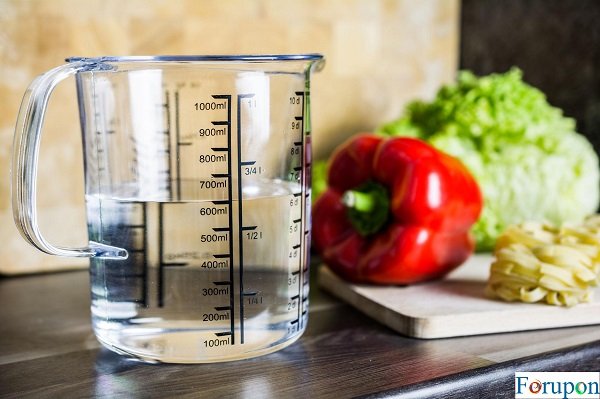
A standard US liquid measuring cup typically includes markings for cups, ounces, and sometimes milliliters.
Pour the liquid into the cup until it reaches the 1-cup or 8-fluid-ounce marking. Place the cup on a flat surface and check the liquid level at eye level for a more accurate reading.
Use a Kitchen Scale for Water
A digital kitchen scale can help measure water by weight.
Approximately 227 grams of water corresponds to one US cup for practical kitchen purposes.
Place an empty container on the scale, reset the display to zero, and gradually add water until the scale reaches approximately 227 grams.
Remember that this technique is useful for water; it should not be treated as a universal conversion for every ingredient.
US Cups vs. Metric Measurements
American recipes commonly use cups and fluid ounces, while many other countries rely on milliliters and grams.
Understanding the difference makes it easier to follow international recipes.
According to NIST’s cooking measurement equivalencies, one US cup is approximately 240 milliliters.
US Cup to Milliliter Conversion Chart
| US measurement | Approximate milliliters |
|---|---|
| ⅛ cup | 30 mL |
| ¼ cup | 60 mL |
| ⅓ cup | 80 mL |
| ½ cup | 120 mL |
| ⅔ cup | 160 mL |
| ¾ cup | 180 mL |
| 1 cup | 240 mL |
| 2 cups | 480 mL |
| 3 cups | 720 mL |
| 4 cups | 950 mL |
These are rounded cooking equivalents, not exact scientific conversions.
Is a US Cup the Same as a Metric Cup?
No. A US customary cup is approximately 236.6 milliliters, while a metric cup is commonly defined as 250 milliliters.
NIST uses the rounded 240-milliliter equivalent for everyday cooking conversions.
This difference can matter when following recipes from different countries, particularly in baking, where precise ingredient measurements are important.
If you’re using an international recipe, check whether it specifies US cups, metric cups, milliliters, or grams.
Common Kitchen Measurement Equivalents
Knowing a few basic conversions makes cooking easier and reduces the need to look up measurements repeatedly.
Cups, Pints, Quarts, and Gallons
| US measurement | Cups | Fluid ounces |
|---|---|---|
| ½ pint | 1 cup | 8 fl oz |
| 1 pint | 2 cups | 16 fl oz |
| 1 quart | 4 cups | 32 fl oz |
| ½ gallon | 8 cups | 64 fl oz |
| 1 gallon | 16 cups | 128 fl oz |
Tablespoons and Teaspoons
| Measurement | Equivalent |
|---|---|
| 1 teaspoon | ⅙ fluid ounce |
| 3 teaspoons | 1 tablespoon |
| 2 tablespoons | 1 fluid ounce |
| 4 tablespoons | ¼ cup |
| 8 tablespoons | ½ cup |
| 16 tablespoons | 1 cup |
These conversions are particularly helpful when adjusting recipes, preparing sauces, and measuring smaller quantities of liquid ingredients.
12. Frequently Asked Questions
1. How many ounces are in 1 cup?
One US customary cup contains 8 fluid ounces. This is the standard volume conversion used in American cooking and baking.
2. Is 8 ounces equal to 1 cup?
Yes, 8 US fluid ounces equal 1 US customary cup. However, 8 ounces by weight do not necessarily equal one cup because ingredient weights vary.
3. How many ounces are in ½ cup?
Half a US cup equals 4 fluid ounces. This is a common measurement for milk, water, juice, and other liquids.
4. How many ounces are in ¼ cup?
One-quarter of a US cup equals 2 fluid ounces. It is also equivalent to 4 tablespoons.
5. How many ounces are in ¾ cup?
Three-quarters of a US cup equals 6 fluid ounces.
6. How many ounces are in 2 cups?
Two US cups equal 16 fluid ounces, which is equivalent to 1 US pint.
7. How many ounces are in a cup of flour?
One cup of all-purpose flour weighs approximately 4¼ ounces (120 grams). The actual weight can vary depending on how the flour is measured.
8. How many ounces are in a cup of sugar?
One cup of granulated white sugar weighs approximately 7 ounces (198 grams). This is a weight measurement, not a fluid-ounce measurement.
9. Are dry ounces and fluid ounces the same?
No. Fluid ounces measure volume, while dry ounces generally refer to weight. You cannot use them interchangeably without considering the ingredient’s density.
10. How many milliliters are in a US cup?
One US customary cup is approximately 240 milliliters for everyday cooking conversions. Its more precise volume is approximately 236.6 milliliters.
11. How many cups are in 16 fluid ounces?
There are 2 US cups in 16 fluid ounces. Divide 16 by 8 to get the answer.
12. How many tablespoons are in one cup?
One US cup contains 16 tablespoons or 48 teaspoons.
13. Conclusion
One US customary cup contains 8 fluid ounces, making it easy to convert liquid measurements for everyday cooking and baking. For example, half a cup equals 4 fluid ounces, while 2 cups equal 16 fluid ounces.
However, remember that fluid ounces and weight ounces are different. A cup of all-purpose flour weighs approximately 4¼ ounces, while a cup of granulated sugar weighs approximately 7 ounces.
For the best cooking and baking results, use a liquid measuring cup for liquids and a digital kitchen scale when precise ingredient weights matter. Understanding these basic conversions makes following recipes, adjusting ingredient quantities, and measuring food much easier.