

Contents
hide
1
Better Than Bouillon: Everything You Need to Know About Flavors, Ingredients, Uses, and Nutrition
Better Than Bouillon: Everything You Need to Know About Flavors, Ingredients, Uses, and Nutrition
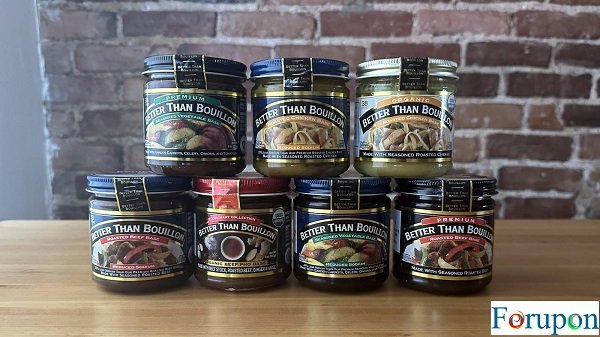
Better Than Bouillon is a concentrated cooking base that helps home cooks add rich, savory flavor to everyday meals without preparing traditional stock from scratch. Available in a variety of meat, seafood, vegetable, and specialty flavors, this popular kitchen product can be used to prepare broth, season rice, improve soups, enhance sauces, and bring additional depth to numerous recipes.
Unlike traditional bouillon cubes, which come in solid form, Better Than Bouillon is sold as a spoonable paste in jars. This format makes it convenient to measure and incorporate into different dishes. However, understanding its ingredients, sodium content, flavor options, and proper storage instructions is important before making it a regular pantry staple.
Whether you are preparing homemade chicken soup, cooking beef stew, seasoning vegetables, or looking for an alternative to packaged broth, this guide explains how Better Than Bouillon works and how to use it effectively.
What Is Better Than Bouillon?
Better Than Bouillon is a concentrated food base made from cooked meat, seafood, and/or vegetables, depending on the product. It is designed to add concentrated savory flavor to recipes and can also be mixed with hot water to create broth.
The product is manufactured under the Better Than Bouillon brand, which belongs to Summit Hill Foods. The company describes its products as versatile flavor bases that can be used in soups, sauces, marinades, vegetables, meats, and other everyday meals.
The product is particularly useful for people who want the flavor of a prepared stock without keeping large containers of liquid broth in their refrigerators or pantry.
Most varieties come in jars containing concentrated paste. A small amount can provide substantial flavor, making it possible to adjust the seasoning according to the recipe.
What Makes Better Than Bouillon Different?
The main difference is its concentrated paste format.
Traditional broth is already diluted with water, while bouillon cubes are compressed seasoning products. Better Than Bouillon comes in a spoonable form that can be measured and added directly to cooking ingredients or dissolved in water.
Its main characteristics include:
- Concentrated flavor: A small spoonful adds savory flavor to recipes.
- Multiple varieties: Different bases are available for meat, seafood, vegetables, and specialty cooking applications.
- Flexible measurements: Cooks can adjust the quantity to suit their recipes.
- Versatile applications: It works in soups, sauces, rice, vegetables, marinades, and other dishes.
- Convenient storage: The concentrated format takes up less space than containers of prepared broth.
How Does Better Than Bouillon Work?
Better Than Bouillon works by concentrating savory ingredients into a paste that can be incorporated into food.
When mixed with hot water, the paste creates a broth-like liquid. When added directly to a cooking dish, it distributes flavor throughout the other ingredients.
For example, a teaspoon of roasted chicken base can be dissolved in hot water to make a small amount of chicken broth. The same base can also be added to rice, gravy, or vegetable dishes to provide additional savory flavor.
The manufacturer’s standard preparation instruction is:
1 teaspoon of Better Than Bouillon dissolved in 8 ounces of hot or boiling water makes approximately 8 ounces of broth.
This is equivalent to one 8-ounce can of broth or one bouillon cube, according to the manufacturer’s FAQ.
The quantity can be adjusted when using the paste as a seasoning rather than preparing broth. Start with a small amount, taste the dish, and add more if necessary.
Better Than Bouillon Flavors and Product Types
One of the biggest advantages of Better Than Bouillon is its selection of flavors. The brand offers traditional cooking bases, organic varieties, vegetarian and vegan options, reduced-sodium products, and specialty flavors.
Product availability and formulations can change, so consumers should check the current product label and official product catalog.
1. Roasted Chicken Base
Roasted Chicken Base is one of the brand’s signature varieties. It provides a savory chicken flavor that works well in homemade soups, chicken casseroles, rice dishes, gravies, and sauces.
Common uses include:
- Chicken noodle soup
- Chicken and rice
- Gravy and pan sauces
- Chicken pot pie filling
- Slow-cooked chicken dishes
It is a practical choice when a recipe requires chicken broth or additional chicken flavor.
2. Roasted Beef Base
Roasted Beef Base is designed to add a rich beef flavor to recipes.
It can be used when preparing beef stew, onion soup, gravy, roasted vegetables, and other dishes that benefit from a concentrated beef flavor.
Popular applications include:
- Beef stew
- French onion soup
- Beef gravy
- Pot roast
- Beef-flavored rice
- Sauces for meat dishes
3. Seasoned Vegetable Base
Seasoned Vegetable Base combines vegetables and seasonings to create a savory vegetable flavor.
It can be useful in vegetable soups, lentil dishes, rice, pasta, sauces, and other plant-focused meals.
However, consumers following a strict vegetarian or vegan diet should always check the product’s certification and ingredient statement rather than assuming every vegetable-flavored product meets their requirements.
4. Vegetarian No Chicken and No Beef Bases
The Vegetarian No Chicken and Vegetarian No Beef varieties are designed to provide familiar savory flavor without using chicken or beef as the flavor base.
They can be useful for:
- Vegetarian soups
- Plant-based gravies
- Rice and noodle dishes
- Vegetable stews
- Meat-free sauces
The brand identifies these varieties among its certified vegan products.
5. Organic Better Than Bouillon
The organic range provides additional choices for consumers who prefer products made with certified organic ingredients.
Examples include Organic Roasted Chicken Base, Organic Roasted Beef Base, and Organic Seasoned Vegetable Base.
The manufacturer states that its certified organic products contain at least 95% organic ingredients.
6. Reduced-Sodium Better Than Bouillon
Reduced-sodium varieties are designed for people who want an option with less sodium than the corresponding original base.
The manufacturer states that its reduced-sodium bases contain one-quarter less salt than its original bases.
However, reduced sodium does not mean sodium-free. Always compare the nutrition labels before selecting a product.
7. Specialty and Culinary Collection Flavors
The brand also offers specialty options for cooks who want to experiment with different flavor profiles.
Examples listed in its product catalog include:
- Roasted Garlic Base
- Mushroom Base
- Sautéed Onion Base
- Chili Base
- Baked Ham Base
- Seasoned Lobster Base
- Roasted Turkey Base
- Adobo Base
- Sofrito Base
- Pho Base
- Birria Base
- Italian Herb Base
- Smoky Chipotle Base
- Chicken Ramen Base
- Tonkotsu Ramen Base
These products can help home cooks add more specific flavor profiles to dishes without combining multiple seasonings from scratch.
How to Use Better Than Bouillon in Cooking
Better Than Bouillon can be used in several ways. The best approach depends on whether you need broth or simply want to improve the flavor of a recipe.
1. Make Homemade-Style Broth
One of the easiest ways to use the product is to prepare broth.
Follow these steps:
- Heat 8 ounces of water until hot or boiling.
- Measure one teaspoon of the appropriate Better Than Bouillon base.
- Add the paste to the water.
- Stir until it is incorporated.
- Use the prepared broth in your recipe.
Choose chicken, beef, or vegetable base according to the dish you are preparing.
2. Add Flavor to Soups and Stews
Soups and stews are among the most practical applications for concentrated cooking bases.
For chicken noodle soup, add roasted chicken base to the cooking liquid. For beef stew, use roasted beef base to strengthen the savory flavor.
When preparing vegetable soup, a suitable vegetable base can provide additional depth.
Start with a modest amount because the product is concentrated. Taste the soup before adding extra salt.
3. Improve Rice and Pasta
Plain rice and pasta can benefit from additional seasoning.
Instead of using only water, dissolve an appropriate base into the cooking liquid.
For example:
- Use roasted chicken base for savory chicken rice.
- Use vegetable base for vegetable rice.
- Use mushroom base for mushroom-flavored rice.
- Use roasted beef base in recipes that pair well with beef flavor.
Be careful not to use too much, particularly when the dish also contains salted butter, cheese, packaged seasonings, or other salty ingredients.
4. Enhance Sauces and Gravies
A small amount of concentrated base can improve the savory character of homemade sauces and gravies.
Roasted beef base works well in beef gravy, while roasted chicken base can complement chicken sauces.
For vegetable-based sauces, consider a suitable vegetable or mushroom variety.
Dissolve the paste in a small amount of warm liquid before incorporating it into a sauce to help distribute it evenly.
5. Season Vegetables
Better Than Bouillon can also be used to enhance vegetables.
Mix a small amount into a little warm water or oil before coating vegetables prior to cooking.
Suitable applications include:
- Roasted potatoes
- Green beans
- Carrots
- Mushrooms
- Roasted cauliflower
- Vegetable casseroles
Choose a flavor that complements the vegetables rather than overpowering them.
6. Use It in Marinades
Concentrated bases can contribute savory flavor to marinades.
Combine an appropriate base with ingredients such as olive oil, garlic, herbs, vinegar, or lemon juice.
For chicken, a chicken base may complement the other ingredients. For beef, a roasted beef base can add a deeper savory element.
Remember that the product contains salt, so additional salt may not be necessary.
Better Than Bouillon vs. Bouillon Cubes vs. Broth
These products serve similar purposes, but their formats, preparation methods, and flexibility differ.
| Feature | Better Than Bouillon | Bouillon Cubes | Liquid Broth |
|---|---|---|---|
| Form | Concentrated paste | Solid cube | Liquid |
| Preparation | Mix with water or add to recipes | Usually dissolve in water | Usually ready to use |
| Measurement | Spoonable | Usually portioned into cubes | Measured by volume |
| Storage | Refrigerate after opening | Follow package instructions | Follow package instructions |
| Flavor options | Wide selection | Depends on brand | Wide selection |
| Main advantage | Flexible seasoning | Convenient portions | Ready-to-use liquid |
Is Better Than Bouillon Better Than Bouillon Cubes?
The answer depends on your cooking preferences.
Better Than Bouillon offers a spoonable format that makes it easier to adjust quantities. Bouillon cubes provide convenient, pre-portioned servings and are generally easy to store.
Neither product is automatically superior in every situation. Compare their ingredients, flavor, sodium levels, cost per serving, and convenience.
Is Better Than Bouillon Better Than Regular Broth?
Better Than Bouillon can be more convenient when storage space is limited or when you want to make only a small quantity of broth.
Liquid broth is more convenient when you need a larger quantity immediately without mixing a concentrate.
The right choice depends on your cooking habits and the recipe.
Better Than Bouillon Ingredients and Nutritional Information
Ingredients and nutritional values vary by flavor. Different bases may contain meat, vegetables, salt, yeast extract, seasonings, oils, starches, and other ingredients.
For example, the manufacturer’s Reduced Sodium Roasted Chicken Base lists roasted chicken, salt, sugar, water, yeast extract, maltodextrin, potato flour, and seasonings.
Its published nutrition information per one-teaspoon serving includes:
| Nutritional component | Amount |
|---|---|
| Calories | 15 |
| Total fat | 0 g |
| Sodium | 500 mg |
| Carbohydrates | 2 g |
| Sugars | 1 g |
| Protein | 1 g |
These figures apply to that particular product, not every Better Than Bouillon variety.
The manufacturer’s Reduced Sodium Seasoned Vegetable Base, for comparison, lists 10 calories and 500 mg of sodium per teaspoon.
Always check the exact package because different flavors and formulations have different nutritional profiles.
Is Better Than Bouillon Healthy?
Better Than Bouillon can be part of many different meals, but whether it is a suitable choice depends on the ingredients, portion size, and overall dietary pattern.
Its concentrated format makes it easy to add flavor using a relatively small quantity. However, sodium is an important consideration.
Sodium Content
Many concentrated soup bases contain substantial amounts of sodium per serving.
For example, the manufacturer’s Reduced Sodium Roasted Chicken Base contains 500 mg of sodium per teaspoon.
That amount represents 22% of the Daily Value shown on its product nutrition label.
Even reduced-sodium varieties can contribute a meaningful amount of sodium to a meal.
People monitoring sodium intake should:
- Compare original and reduced-sodium varieties.
- Measure the amount added to recipes.
- Avoid automatically adding extra salt.
- Check sodium levels in other ingredients.
- Read the nutrition facts on the exact product.
Calories and Other Nutrients
Related Posts
Some Better Than Bouillon products contain relatively few calories per teaspoon, but nutritional values differ between varieties.
A low-calorie serving does not automatically make a product nutritionally superior. Consider the entire ingredient list and how much you use.
Is Reduced-Sodium Better Than Bouillon a Healthier Choice?
It may be a useful option for people trying to reduce sodium compared with the corresponding original variety.
However, the product is not sodium-free. Compare the actual nutrition labels and consider your overall dietary requirements.
People with medical dietary restrictions should follow advice from their qualified healthcare professional.
Is Better Than Bouillon Vegan, Vegetarian, or Gluten-Free?
Dietary suitability depends on the specific product.
Is Better Than Bouillon Vegan?
Some varieties are certified vegan, but meat-based products are not suitable for vegan diets.
The manufacturer identifies the following certified vegan varieties:
- Seasoned Vegetable
- Organic Seasoned Vegetable
- Roasted Garlic
- Sautéed Onion
- No Chicken
- No Beef
Check the packaging for the Certified Vegan logo and current ingredient information.
Is Better Than Bouillon Vegetarian?
Some products are appropriate for vegetarian diets, while chicken, beef, turkey, and other animal-based products are not.
Do not assume that every vegetable-labeled product is vegetarian without checking its ingredients.
Is Better Than Bouillon Gluten-Free?
The manufacturer has published information explaining that it is transitioning its products to gluten-free labeling.
Its FAQ identifies certain reformulated varieties and advises customers to read individual product labels because older products may still be available in stores.
Therefore, consumers who must avoid gluten should verify the exact product and current package rather than assuming every flavor has identical gluten-free status.
Does Better Than Bouillon Contain MSG?
The manufacturer states that it does not add MSG to its Better Than Bouillon products.
However, consumers should still examine individual ingredient lists if they have questions about specific flavoring ingredients or dietary sensitivities.
How to Store Better Than Bouillon
Proper storage is important for maintaining product quality.
According to the manufacturer’s FAQ, Better Than Bouillon should be refrigerated after opening.
The manufacturer also advises against freezing its products.
Does Better Than Bouillon Need Refrigeration After Opening?
Yes. The manufacturer recommends refrigerating Better Than Bouillon after opening.
Close the jar securely and follow the storage instructions printed on the package.
How Long Does Better Than Bouillon Last?
The manufacturer states that the shelf life is two years from the date of manufacture.
However, this is not a guarantee that an opened jar will maintain its quality indefinitely.
Follow the Best By date printed on the lid and the storage directions. The manufacturer advises discarding products that have passed that date because taste and performance cannot be guaranteed.
Can You Freeze Better Than Bouillon?
The manufacturer specifically advises consumers not to freeze Better Than Bouillon.
Refrigeration after opening is the recommended storage method.
Why Does Better Than Bouillon Change Color?
The manufacturer explains that its products can become darker during storage.
This can happen because the bases contain real meat, seafood, or vegetables. Natural color variation is expected.
However, color changes alone should not be used to determine whether an older product is safe. Check the Best By date, packaging condition, and storage history, and follow the manufacturer’s disposal guidance.
Best Better Than Bouillon Substitutes and Alternatives
If you do not have Better Than Bouillon available, several alternatives can provide similar cooking functions.
The best substitute depends on the recipe and the flavor you want.
1. Traditional Bouillon Cubes
Bouillon cubes are one of the closest alternatives.
They provide concentrated seasoning and can usually be dissolved in hot water to prepare broth.
Use the conversion instructions on the specific cube package because brands and serving sizes can differ.
2. Liquid Chicken or Beef Broth
Prepared broth is a straightforward substitute when a recipe requires chicken or beef stock.
Use the appropriate flavor and adjust other liquid quantities in the recipe.
Because prepared broth already contains water, you may need to reduce another liquid ingredient to maintain the intended consistency.
3. Vegetable Stock
Vegetable stock is a useful alternative when preparing vegetarian soups, rice, and vegetable dishes.
It provides a liquid seasoning base without requiring meat-based ingredients.
4. Homemade Stock
Homemade chicken, beef, or vegetable stock is another option.
It can be prepared using ingredients such as bones, vegetables, herbs, water, and seasonings, depending on the type of stock.
Homemade stock gives cooks more control over flavor and ingredients, although it requires more preparation time.
5. Other Concentrated Soup Bases
Other brands offer concentrated soup bases in paste, powder, or cube form.
Compare their ingredients, flavor profiles, dietary suitability, sodium levels, and preparation instructions before using them as replacements.
Common Mistakes to Avoid When Using Better Than Bouillon
Even a convenient cooking product can produce disappointing results if used incorrectly.
Here are some common mistakes to avoid.
Using Too Much Paste
Because Better Than Bouillon is concentrated, adding too much can make a dish excessively salty or overpower its other flavors.
Begin with a small quantity and adjust gradually.
Forgetting the Sodium Content
Many recipes already contain salt from cheese, sauces, seasoning blends, or other packaged ingredients.
Adding concentrated soup base without adjusting the remaining seasonings can result in an overly salty dish.
Choosing the Wrong Flavor
Roasted beef base may not complement every chicken or vegetable recipe.
Choose a flavor that works with the main ingredients.
Assuming Every Flavor Is Vegan
Some varieties contain animal-derived ingredients.
Always verify the ingredient list and certification when following a vegan or vegetarian diet.
Leaving the Jar Unrefrigerated
The manufacturer recommends refrigeration after opening.
Follow this instruction to help maintain product quality.
Ignoring the Preparation Instructions
Different products may have different recommended measurements.
Use the package directions and the manufacturer’s conversion calculator when substituting the base for broth or bouillon cubes.
12. Frequently asked questions (FAQs)
1. What exactly is Better Than Bouillon?
Better Than Bouillon is a concentrated food base made with cooked meat, seafood, and/or vegetables. It is used to prepare broth or add savory flavor to soups, sauces, rice, vegetables, and other recipes.
2. How much Better Than Bouillon should I use per cup of water?
The manufacturer’s standard measurement is one teaspoon of Better Than Bouillon per eight ounces (one cup) of hot or boiling water. This produces approximately one cup of broth.
3. Does Better Than Bouillon need to be refrigerated?
Yes. The manufacturer recommends refrigerating the product after opening. Follow the storage instructions on the jar.
4. Is Better Than Bouillon healthier than bouillon cubes?
Not necessarily. Both products can contain substantial sodium. Compare their nutrition labels, ingredients, serving sizes, and sodium content to determine which better suits your dietary needs.
5. Can I use Better Than Bouillon instead of chicken broth?
Yes. Dissolve one teaspoon of roasted chicken base in eight ounces of hot water to make approximately eight ounces of chicken broth.
6. Is Better Than Bouillon gluten-free?
The manufacturer is transitioning its products to gluten-free labeling. However, formulations and packaging may differ. Check the current product label before purchasing, particularly if you have celiac disease or need to avoid gluten strictly.
7. Does Better Than Bouillon contain MSG?
The manufacturer states that it does not add MSG to its products. Check the individual ingredient statement for other flavor-enhancing ingredients.
8. Is Better Than Bouillon suitable for vegans?
Some varieties are certified vegan, including Seasoned Vegetable, Roasted Garlic, Sautéed Onion, No Chicken, and No Beef. Other varieties contain animal-derived ingredients.
9. Can Better Than Bouillon replace bouillon cubes?
Yes. The manufacturer’s standard conversion is one teaspoon of Better Than Bouillon for one bouillon cube. Always check the particular product and recipe instructions.
10. How long does Better Than Bouillon last?
The manufacturer states that its unopened products have a two-year shelf life from the manufacturing date. Follow the Best By date and refrigeration instructions after opening.
11. Can you freeze Better Than Bouillon?
No. The manufacturer advises against freezing the product. Refrigerate it after opening instead.
12. What is the most popular Better Than Bouillon flavor?
Roasted Chicken Base is one of the brand’s signature products. Other popular product categories include roasted beef, seasoned vegetable, roasted garlic, and specialty bases. Individual preferences vary.
13. Can I add Better Than Bouillon directly to food?
Yes. It can be incorporated directly into soups, sauces, vegetables, and other heated recipes. You can also dissolve it in warm liquid first to distribute it more evenly.
14. Does Better Than Bouillon contain preservatives?
Ingredients vary by flavor. Review the exact product’s ingredient statement rather than assuming every variety has the same formulation.
15. Where can I buy Better Than Bouillon?
In the United States, consumers can look for Better Than Bouillon at grocery stores, participating retailers, and the brand’s official website. Availability varies by flavor and location.
Conclusion
Better Than Bouillon is a versatile concentrated cooking base that can make everyday meal preparation more convenient. Its spoonable format, variety of flavors, and multiple cooking applications make it useful for preparing broth, improving soups, seasoning rice, enhancing sauces, and adding savory flavor to vegetables and other dishes.
The best product depends on your recipe, dietary preferences, and nutritional priorities. Roasted chicken and beef bases are useful for traditional savory meals, while vegetable, vegan, organic, and reduced-sodium varieties provide additional choices.
For the best results, measure the paste carefully, check the sodium content, select the appropriate flavor, and refrigerate the jar after opening. Used thoughtfully, Better Than Bouillon can be a practical addition to a well-stocked kitchen.