
Cars for Sale in the US: How to Find, Compare, and Buy the Right One

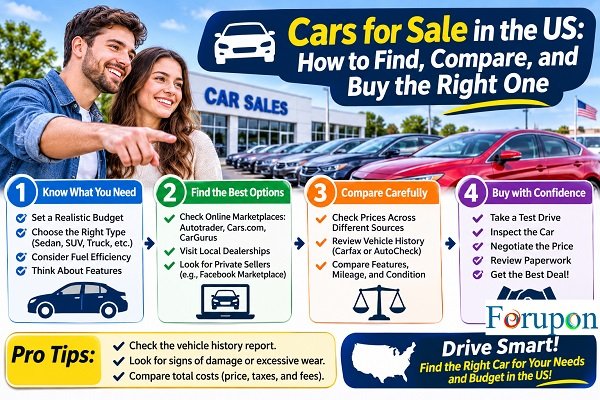
Cars for Sale in the US
Cars for Sale in the US: The average new car now sells for about $51,000, and the average used car is listed near $27,000. Those two numbers shape every decision about cars for sale today: where you look, how much you borrow, and whether used makes sense. This guide covers current prices, the places to find a car, and the steps that keep you from overpaying.
How much do cars for sale cost right now?
Short answer: new cars averaged $51,109 in October 2026, and used cars averaged about $27,200 in listings in September 2026.
Kelley Blue Book reported a record average new-vehicle transaction price of $51,109 for October, up 2.1% from a year earlier. Incentives averaged $3,490, or 6.8% of the price. Cox Automotive put the average used-vehicle listing price at $27,235 in September, the highest monthly figure since December 2022.
| Measure | Figure | Source and date |
|---|---|---|
| Average new-car transaction price | $51,109 | Kelley Blue Book, Oct 2026 |
| Average new electric vehicle price | $56,220 | Kelley Blue Book, Oct 2026 |
| Average used-car listing price | $27,235 | Cox Automotive, Sep 2026 |
| Average new-car loan APR | 7.0% | Edmunds, Q3 2026 |
| Average used-car loan APR | 10.6% | Edmunds, Q3 2026 |
Cheap used cars are getting harder to find. Cars listed under $15,000 made up 15.7% of used inventory in September, down from 19.4% a year earlier, and their supply ran 15 days below the industry average.
Prices vary by region, model, and mileage, so treat these as national averages, not a quote for your area.
Where can you find cars for sale?
You can buy from franchised dealers, independent dealers, online retailers, or private sellers. Each trades off price, protection, and effort.
| Where | Best for | Watch out for |
|---|---|---|
| Franchised dealers | New cars, certified pre-owned, trade-ins | Add-ons and fees in the final paperwork |
| Independent dealers | Wider used selection, lower asking prices on average | Quality varies; inspection matters more |
| Online retailers | Shopping without a showroom visit | Confirm return terms in writing; check delivery fees |
| Private sellers | Lower prices, no dealer fees | No dealer warranty; you handle title and payment safely |
In Cox Automotive’s late-2021 data, independent dealers averaged lower prices than franchised dealers but higher mileage. That pattern is a reason to compare mileage, not only price, when you shop.
New or used: which should you buy?
Short answer: buy new if you want a warranty, the latest safety features, and a low promotional rate. Buy used if you want a lower monthly payment and can tolerate unknown history.
The average payment gap is real but smaller than the sticker gap suggests. Edmunds put the average financed new-car payment at $787 a month in Q3 2026, against $582 for used. The used loan carried a much higher average rate (10.6% versus 7.0%), which narrows the savings.
A useful way to decide:
- Choose new if you will keep the car for many years, qualify for a strong rate, and value a full warranty.
- Choose used or certified pre-owned if your budget is the limit and you will pay for an inspection.
- Compare total cost, not payment. A cheaper car on a longer, higher-rate loan can cost more over time.
What to check before buying a used car
Used cars carry the most risk, so a few checks matter more than any negotiation tactic.
Related Posts
- Read the Buyer’s Guide. The FTC’s Used Car Rule requires dealers to post this sticker on every used car they offer. It states whether the car is sold “as is” or with a warranty and lists major systems and common problems. The rule applies in every state except Maine and Wisconsin, which have their own disclosure rules.
- Keep the Buyer’s Guide. Get the original or a copy at purchase. It should reflect any warranty terms you negotiated.
- Run a vehicle history report. The Buyer’s Guide itself points shoppers toward history reports.
- Check for open recalls. Search the VIN on NHTSA’s recall tool.
- Get an independent inspection. The FTC advises asking to have the car inspected by an independent mechanic. A seller who refuses is giving you information.
- Treat spoken promises with caution. If it is not in writing, it is hard to enforce.
How to buy a car, step by step
- Set a total budget. Include the payment, insurance, registration, fuel, and maintenance, not only the loan.
- Get pre-approved for financing from a bank or credit union before visiting a dealer. It gives you a rate to compare against the dealer’s offer.
- Build a shortlist of two or three models and check reliability and safety ratings.
- Check a fair price. Compare the asking price with a pricing guide for your area, such as Kelley Blue Book’s Fair Purchase Price.
- Inspect and test drive. Drive on roads you use daily, including a highway stretch.
- Negotiate the out-the-door price. This is the total including taxes and fees. Negotiating the payment alone hides cost.
- Read every line of the contract before signing, including add-ons you did not request.
- Confirm title, registration, and insurance before you drive away.
What financing looks like today
Edmunds reported record borrowing in Q3 2026. New-car buyers financed an average of $44,664, and 25.5% chose loans of 84 months or longer. Total interest on the average new-car loan reached a record $9,938.
Longer terms lower the payment but raise the interest. Compare offers on APR, term, and total cost, and consider a larger down payment if you can.
Do any tax breaks apply?
The federal EV credits ended for vehicles acquired after September 30, 2025. In their place, buyers of new, personal-use vehicles with final assembly in the United States can deduct up to $10,000 a year in loan interest for tax years 2025 through 2028, subject to income limits. Used cars and leases do not qualify. Check the window sticker or VIN for the assembly location, and confirm eligibility with a tax professional.
Common mistakes to avoid
- Shopping by monthly payment. It lets a longer loan hide a higher price.
- Skipping the inspection on a used car because the history report looks clean.
- Ignoring the rate. On used loans averaging 10.6%, a few points matter a lot.
- Buying add-ons by default. Ask what each one costs and whether it is optional.
- Sending money before seeing the car or paying a private seller with an untraceable method.
- Assuming prices will fall soon. Wholesale used values peaked in March and have drifted lower, per Cox Automotive, but retail asking prices stayed near multi-year highs in September. Direction is uncertain.
12. FAQ Section
What is the best site for finding cars for sale? No single site is best. Check several listing sites and dealer inventories, then compare the same car across them. Cross-check price against a pricing guide.
Is it better to buy a new or used car right now? It depends on your budget and rate. New cars cost about $24,000 more on average, but used loans carry higher rates, so compare total cost.
How much should I spend on a car? A commonly cited rule of thumb is a 20% down payment, a loan of four years or less, and total car costs near 10% of income. It is a guideline, not an official standard. Adjust it to your finances.
Can I return a car after buying it? Usually not. Generally, there is no federal right to cancel a dealership car purchase, and return policies are set by the seller. Get any return policy in writing and check your state’s rules.
What is an FTC Buyer’s Guide? It is a sticker the FTC requires on used cars for sale at dealers. It shows whether the car is sold as is or with a warranty, and lists major systems and common problems.
Can I get a tax break on a car in 2026? Possibly. Interest on a loan for a new, US-assembled, personal-use vehicle may be deductible up to $10,000 a year, with income phase-outs. The federal EV credits have ended.
Conclusion
Start with the numbers: about $51,000 for the average new car, about $27,000 for the average used one, and loan rates of 7.0% and 10.6%. Set a total budget, secure financing first, and compare the out-the-door price. For used cars, read the Buyers Guide and pay for an independent inspection before you commit.